
NATIONAL HISPANIC HERITAGE MONTH
SEPTEMBER 15TH - OCTOBER 15TH
National Hispanic Heritage Month celebrates the culture, history, and contributions of Hispanic Americans. Observed each year from September 15 to October 15, this annual celebration began in 1968 as “Hispanic Heritage Week” (established by Public Law 90-498) and was expanded to a month in 1988.
The mid-September start honors the independence days of several Latin American countries: Costa Rica, El Salvador, Guatemala, Honduras, and Nicaragua (September 15); Mexico (September 16); Chile (September 18); and Belize (September 21). El Día de la Raza (Columbus Day) is also recognized on October 12 during the month-long celebration.
Hispanic Americans have been integral to the prosperity of the U.S. They are also integral to the very fabric of Unity Center of Miami. This month and always, we honor our congregants of Hispanic heritage.

BREAST CANCER AWARENESS MONTH
THE MONTH OF OCTOBER
Breast Cancer Awareness Month, or BCAM, takes place every year from October 1 to October 31. BCAM is recognized as a time to increase awareness of breast cancer, emphasize the importance of early detection, and support those affected. There’s no single official national theme for Breast Cancer Awareness Month 2026, but every October the focus stays the same: early detection, education, and support for those affected by breast cancer.
BCAM isn’t just symbolic. It’s an annual, coordinated effort to educate, engage, and take action on behalf of those facing breast cancer—and those who may in the future.
BCAM reminds us that breast cancer doesn’t wait. Right now, someone is getting the news that they have breast cancer and doesn’t know what to do next. Someone is starting treatment and needs support to make it through. Because of BCAM—and people like you—we can deliver help, hope, and support when it’s needed most.
BCAM also includes many important dates surrounding Breast Cancer, such as Metastatic Breast Cancer Awareness Day (Oct 13th), National Mammography Day (Oct 16th), and Men's Breast Cancer Awareness Week (Oct 17th-23rd).
For more information and resources, go to www.nationalbreastcancer.org
NATIONAL CHILD HEALTH DAY
MONDAY, OCTOBER 5TH
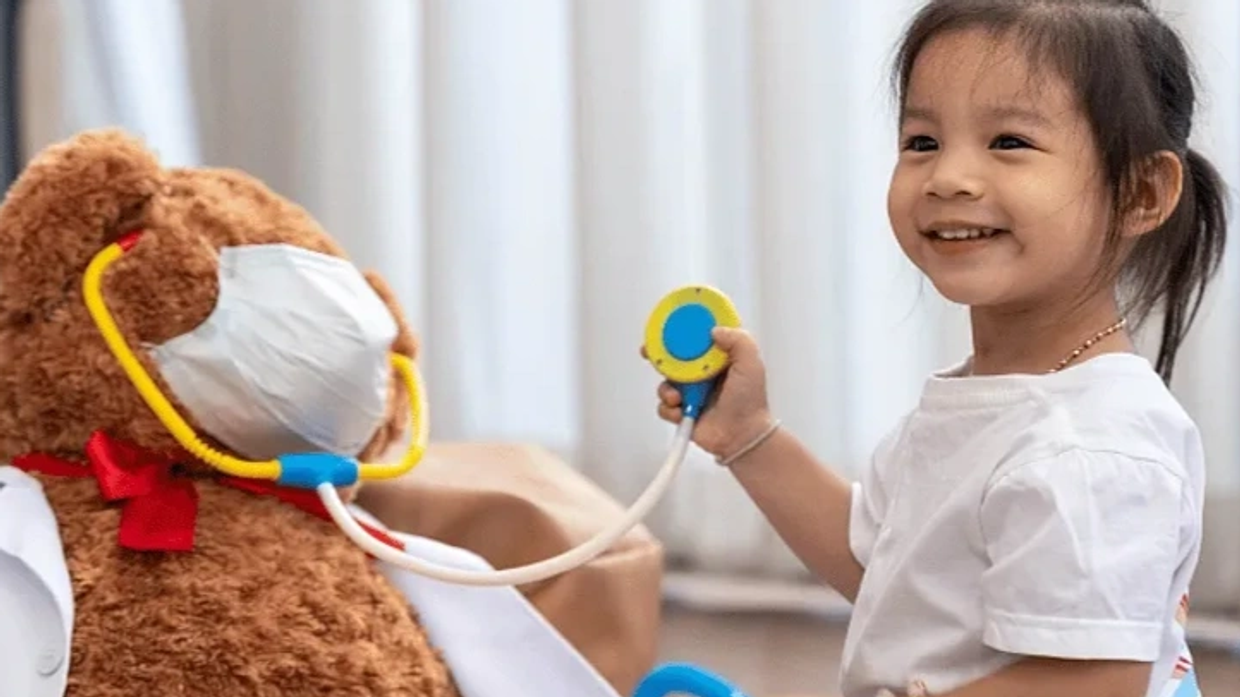
In the United States, National Child Health Day occurs each year on the first Monday in October. The day recognizes the care, and guidance children need to grow strong and healthy.
Each child deserves to be the healthiest he or she can be. From the food they eat to the words they hear, children require support and opportunities to grow. Parents often worry about chronic disease, accidents or childhood illnesses. At the same time, they focus on a child's mental health and general health. Whether it's their environment, the food they eat or how much TV they watch, the day is an excellent opportunity to support the children in your life.
Now is the time to show them that Health Matters!
NATIONAL INNER BEAUTY DAY
WEDNESDAY, OCTOBER 7TH
On October 7, National Inner Beauty Day serves a profound and urgent purpose--to raise awareness and mobilize support for the victims and survivors of human trafficking. This day is not about aesthetics. It’s about recognizing the inherent worth, spirit, and dignity—the true inner beauty—that traffickers attempt to steal. We stand together to honor the resilience of survivors and take meaningful action to end this modern-day slavery.
Everyone has a story, a passion that expresses who we are as individuals. Our strength lies in embracing that story without filtering it through someone else's definition of beauty. When our core values reflect on the outside, we have given the world the gift we were born to give.

NATIONAL CLERGY APPRECIATION DAY
SUNDAY, OCTOBER 11TH
On the second Sunday in October, communities are encouraged to pause and reflect on the tireless work of their spiritual leaders. It’s Clergy Appreciation Day, a time set aside to formally recognize the ministers, pastors, and priests who guide and support their congregations. This observance is a cornerstone of National Clergy Month, which dedicates all of October to honoring these dedicated individuals.
The role of a clergy member often extends far beyond the pulpit. They are counselors in times of crisis, teachers in moments of curiosity, and community pillars during times of uncertainty. The demands are constant, and the emotional and spiritual weight they carry is significant. That's why taking a moment to show gratitude can have such a profound impact.
Let's make sure we take this day to thank our very own Dynamic Clergywoman, Rev. Marvelle for her selfless and loving, Spiritual guidance & leadership!
INDIGENOUS PEOPLES' DAY
MONDAY, OCTOBER 12TH
Indigenous Peoples' Day is observed every year, on the second Monday of the month of October, and this year, it falls on Monday, October 12th.
Indigenous Peoples’ Day honors the histories, cultures, and perspectives of Indigenous peoples and their ancestors who lived on the land now known as North America. They existed in these areas for thousands of years before the first European explorers arrived. This day promotes awareness of Indigenous peoples’ struggles, resilience, and unique traditions, fostering understanding and unity among diverse cultures.
In 1977, during the United Nations International Conference on Discrimination Against Indigenous Populations in the Americas, an “International Day of Solidarity with the Indigenous Peoples of the Americas,” to be observed on October 12, was proposed as a national holiday.
In 1990, South Dakota became the first state to replace Columbus Day (the second Monday in October) with Native Americans’ Day as an official state holiday.
In 1992, Berkeley, California, became the first city to officially observe Indigenous Peoples’ Day. This coincided with the 500th anniversary of Christopher Columbus’s arrival in the Americas in 1492.
While Indigenous Peoples’ Day remains a nonfederal holiday, it is federally recognized as a national holiday. A growing list of state and local governments have acknowledged it in some form as well, including those of Alabama (American Indian Heritage Day), Alaska, California, Hawaii (Discoverers’ Day, to honor Polynesian discoverers of the Hawaiian Islands), Idaho, Iowa, Maine, Michigan, Minnesota, New Mexico, Oregon, South Dakota (Native Americans’ Day), Texas (Indigenous Peoples’ Week), Vermont, Virginia, and Wisconsin, among others.
Where Indigenous Peoples’ Day is officially acknowledged, it is often celebrated in place of or alongside Columbus Day. This is in recognition of the disease, genocide, and slavery brought to the Americas through the interactions of Columbus and other European explorers with Indigenous peoples. In addition, the arrival of European explorers and settlers also meant that Indigenous peoples increasingly lost access to their ancestral lands and natural resources, which significantly impacted their ability to practice aspects of their cultures and traditions.
NATIONAL SWEETEST DAY
SATURDAY, OCTOBER 17TH
National Sweetest Day is observed on the third Saturday in October by people of all ages. For over 100 years, National Sweetest Day encourages everyone to be generous even in the smallest ways.
From its inception as Candy Day in 1916, this day reminds us that even small tokens improve the lives of those around us. While the observance started with candy and sweets given to our sweethearts and friends, the day is full of lessons in persistence, resilience, and doing small things greatly.
HALLOWEEN
SATURDAY, OCTOBER 31ST
Halloween also referred to as Allhalloween, All Hallows' Eve, or All Saints' Eve is celebrated yearly on October 31, the eve of the Western Christian feast of All Hallows' Day or more commonly known as All Saints' Day. Halloween Day is in celebration and remembrance of the dead.
Origin of the word Halloween
The word Halloween or Hallowe’en has a Christian origin dating back to 1745. Hallowe’en means Saints evening and “Hallow” by itself means saints. “Even” means Eve to the Scottish and hence it was later shortened to just “e’en” or “een”, which led to the name "Halloween."
Halloween’s history stretches back roughly two thousand years. It began as the ancient Celtic festival of Samhain (a Gaelic word, pronounced saa-wn), celebrated by the Celts who lived in the lands now known as Ireland, the United Kingdom, and northern France.
Samhain was held from October 31 to November 1 to welcome the harvest and usher in “the dark half of the year.” The Celts believed the veil between worlds thinned on this night and the ghosts of the dead returned to the world of the living. So villagers dressed in costumes, usually made of animal skins, to drive the spirits away. They set out elaborate banquet tables too, a feast offered to pacify malevolent ghosts. That is where costuming comes from. The first door-to-door visits, though, were still centuries away.
Roughly five hundred years after the beginnings of Samhain, the first traditions resembling modern trick-or-treating appeared. People were still dressing up, but the costumes shifted from animal skins to ghosts, demons, and other spooky creatures. Instead of laying out a feast for angry spirits, these costumed villagers (the first trick-or-treaters in everything but name) started putting on performances.
In current times, Halloween is celebrated by children and adults alike, through pumpkin decorating, costume wearing, bobbing for apples, and collecting candy by "Trick-or-Treating".